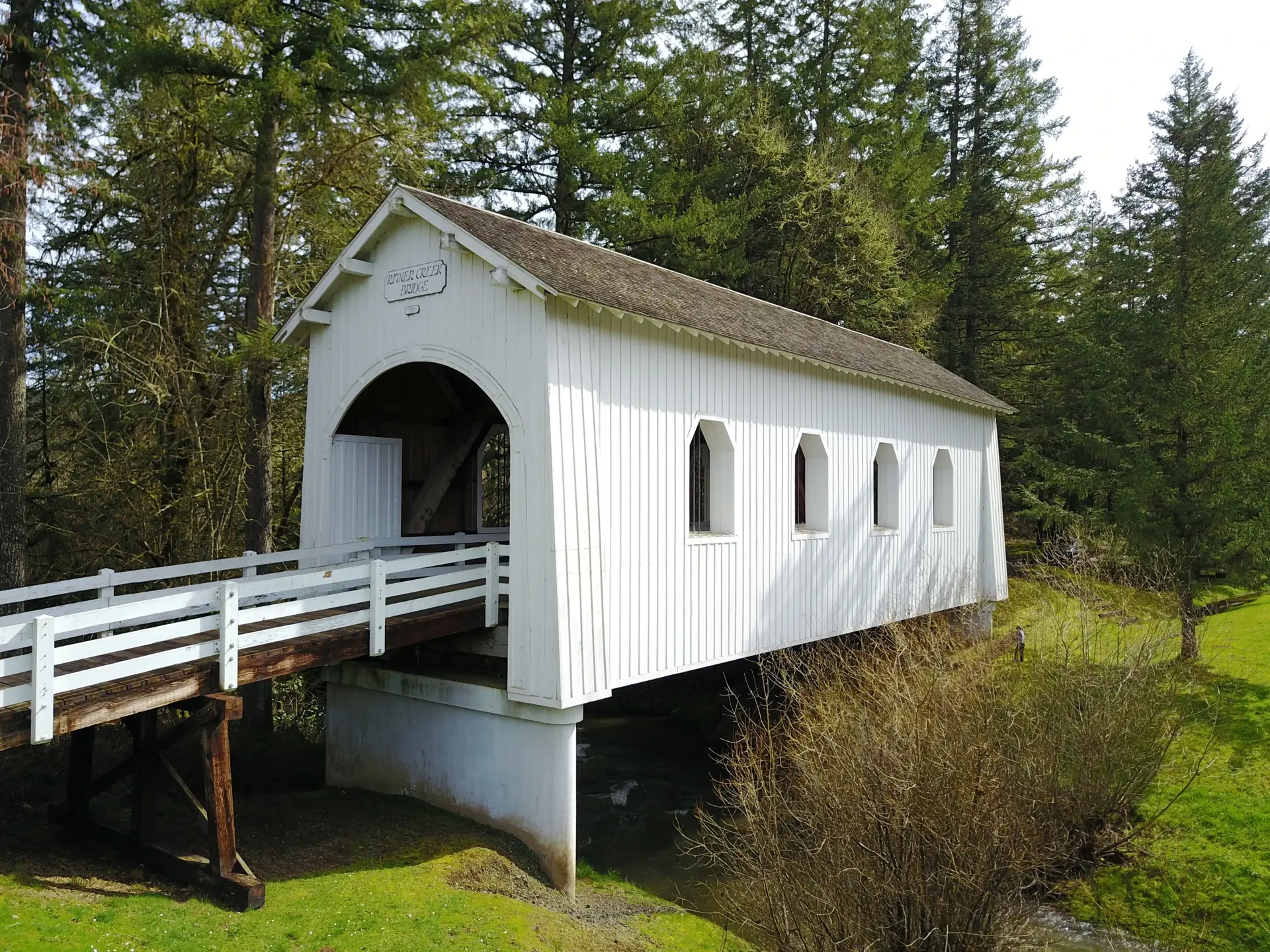
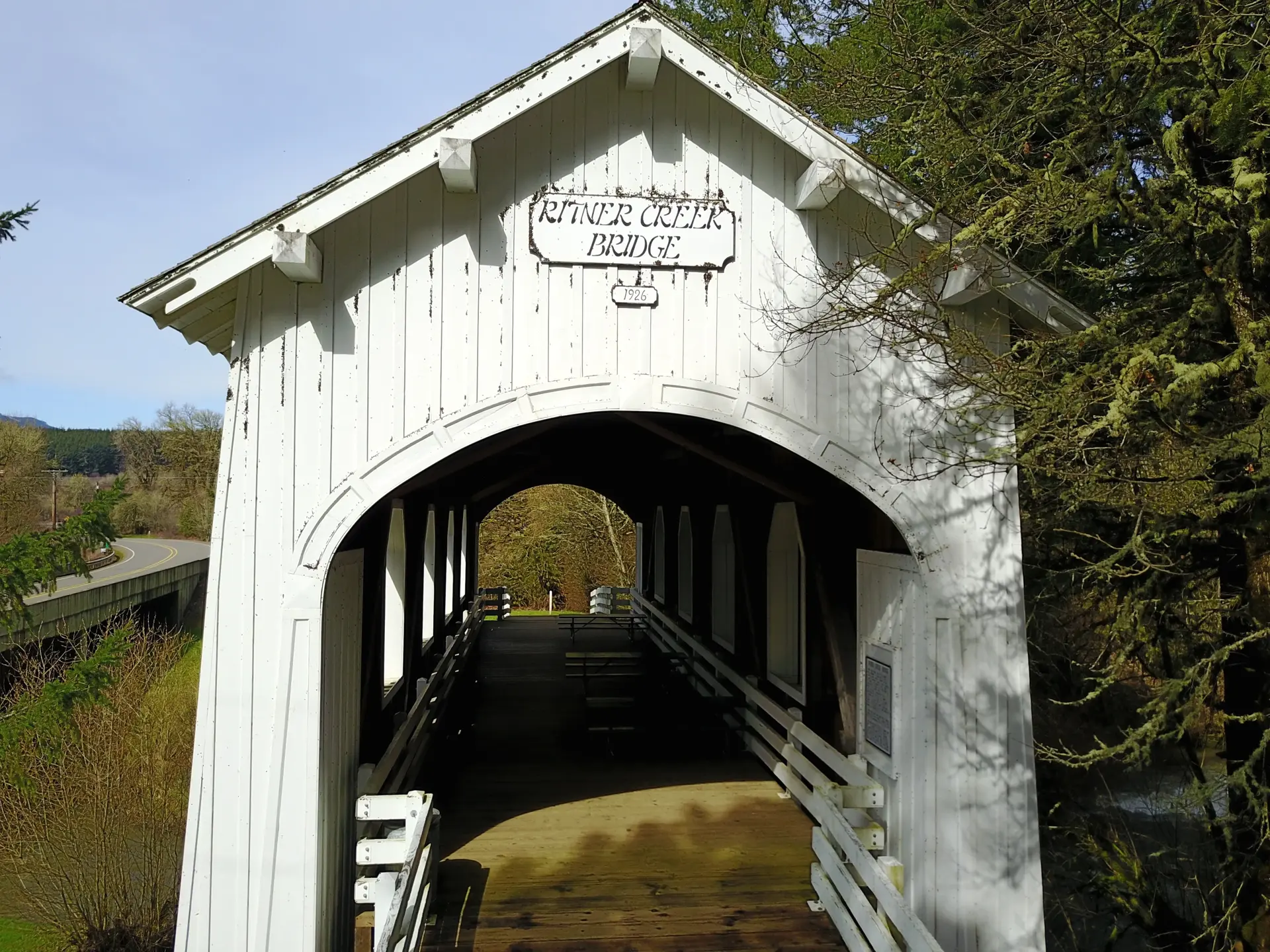
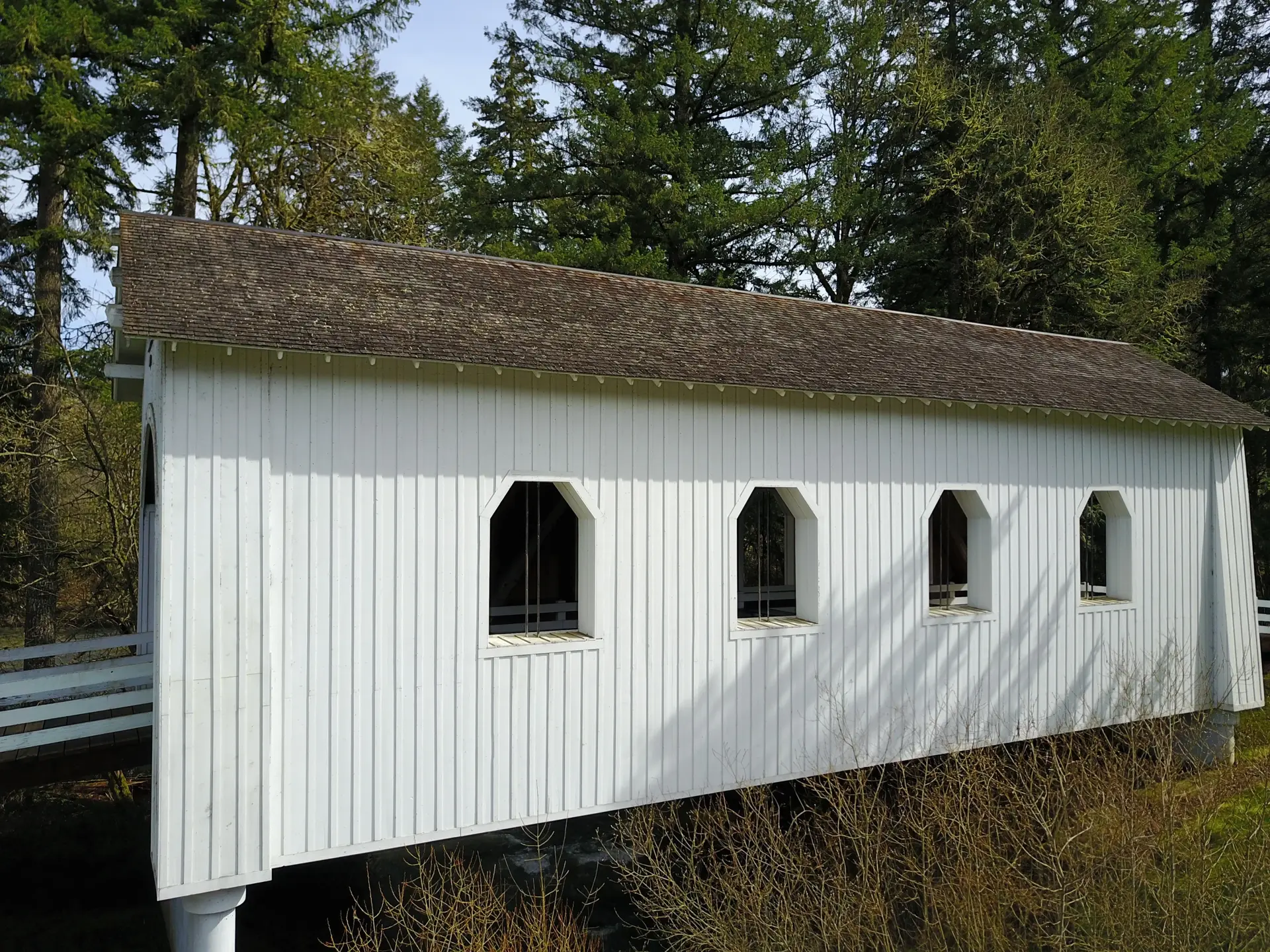
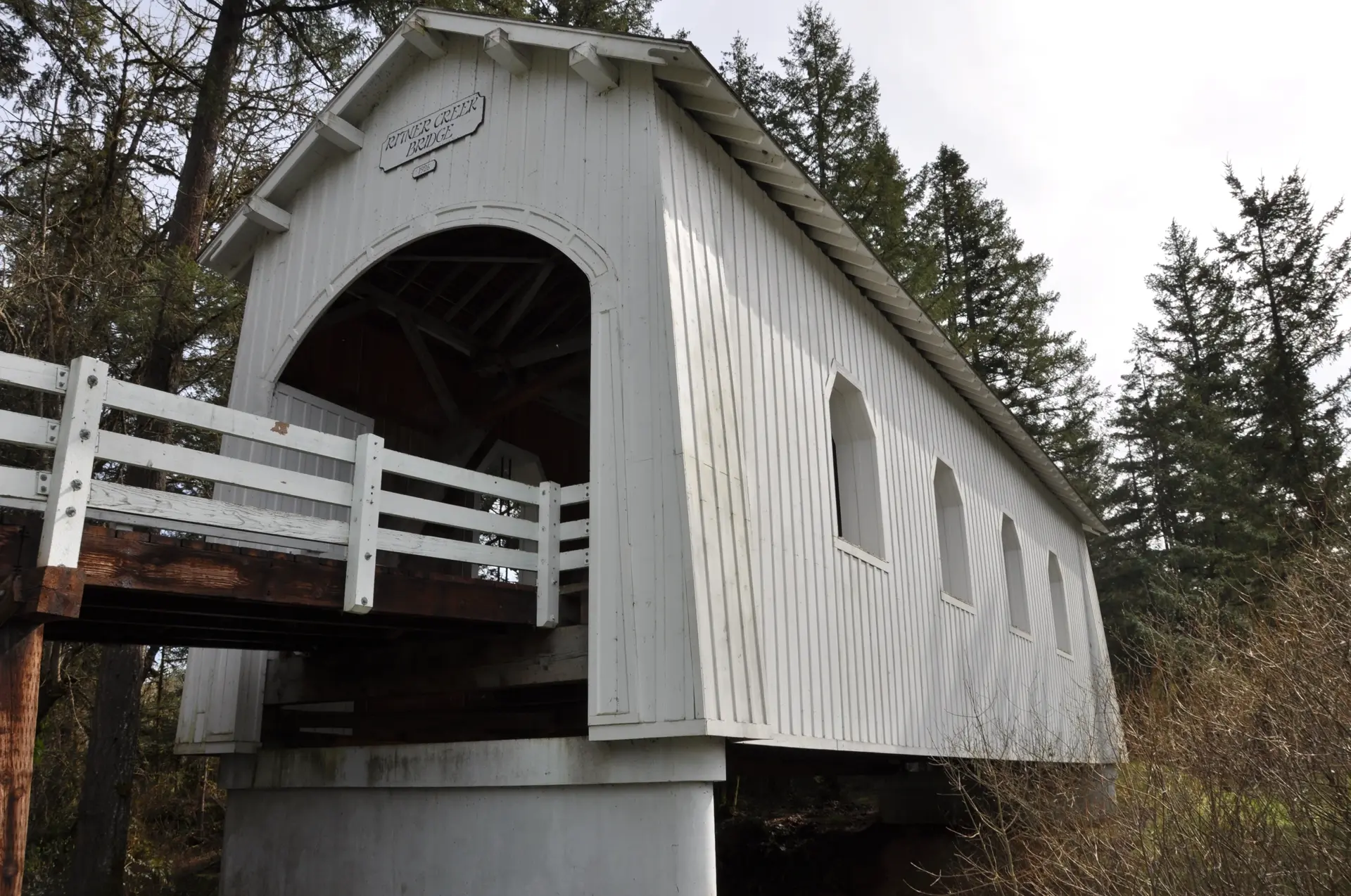
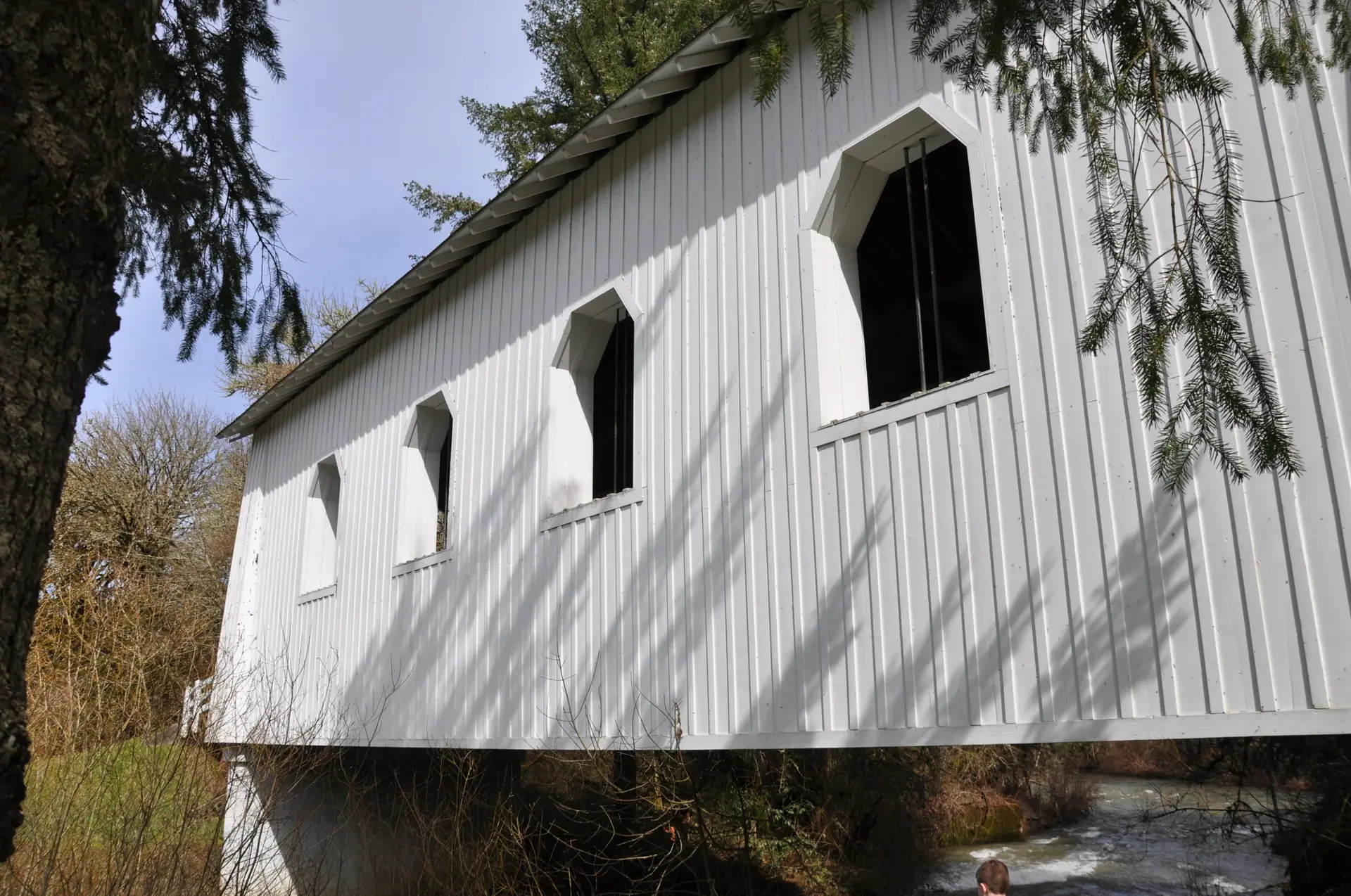
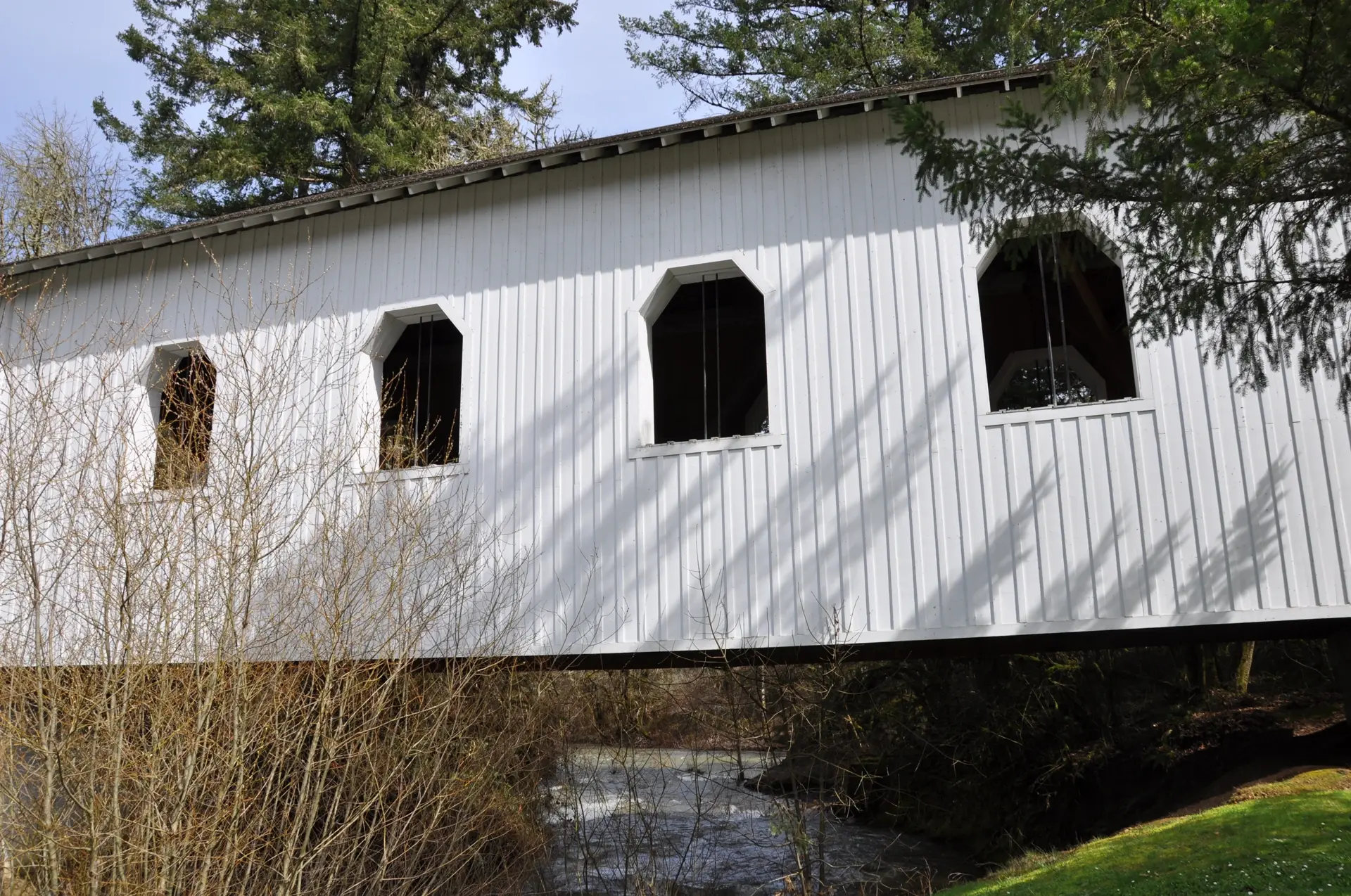
Ritner Creek Bridge is a 73-foot Howe truss covered bridge spanning Ritner Creek near Pedee in Polk County, Oregon. Built in 1927, it is the only surviving covered bridge in Polk County and one of the older remaining examples in the Willamette Valley — its age and rural isolation giving it a particularly authentic and weathered character.
The bridge carries Ritner Creek Road through a deeply wooded creek canyon, its dark timber blending with the surrounding forest canopy of alder and Douglas fir. The setting is one of the most naturally enclosed of any covered bridge in Oregon, offering visitors an intimate glimpse into the bridge's forested context.
Ritner Creek Bridge was built in 1926, placing it among the earlier surviving examples of covered bridge construction in the Willamette Valley. The Howe truss design was already well established in Oregon by this date, and the compact 75-foot span was well matched to the creek's moderate channel width in this forested stretch of the Coast Range foothills.
Ritner Creek and its surrounding community of Pedee developed around logging and small-scale farming in the rolling hills west of the main Willamette Valley floor. The bridge served as a critical link for homesteads and timber operations in the upper creek drainage, where the winding road through the forest depended on reliable crossings.
As the sole surviving covered bridge in Polk County, the Ritner Creek Bridge carries particular historic significance. Listed on the National Register of Historic Places in 1979, it has been maintained as a functioning structure through careful stewardship by the county, and the forest setting continues to attract photographers and covered bridge enthusiasts from across the region.