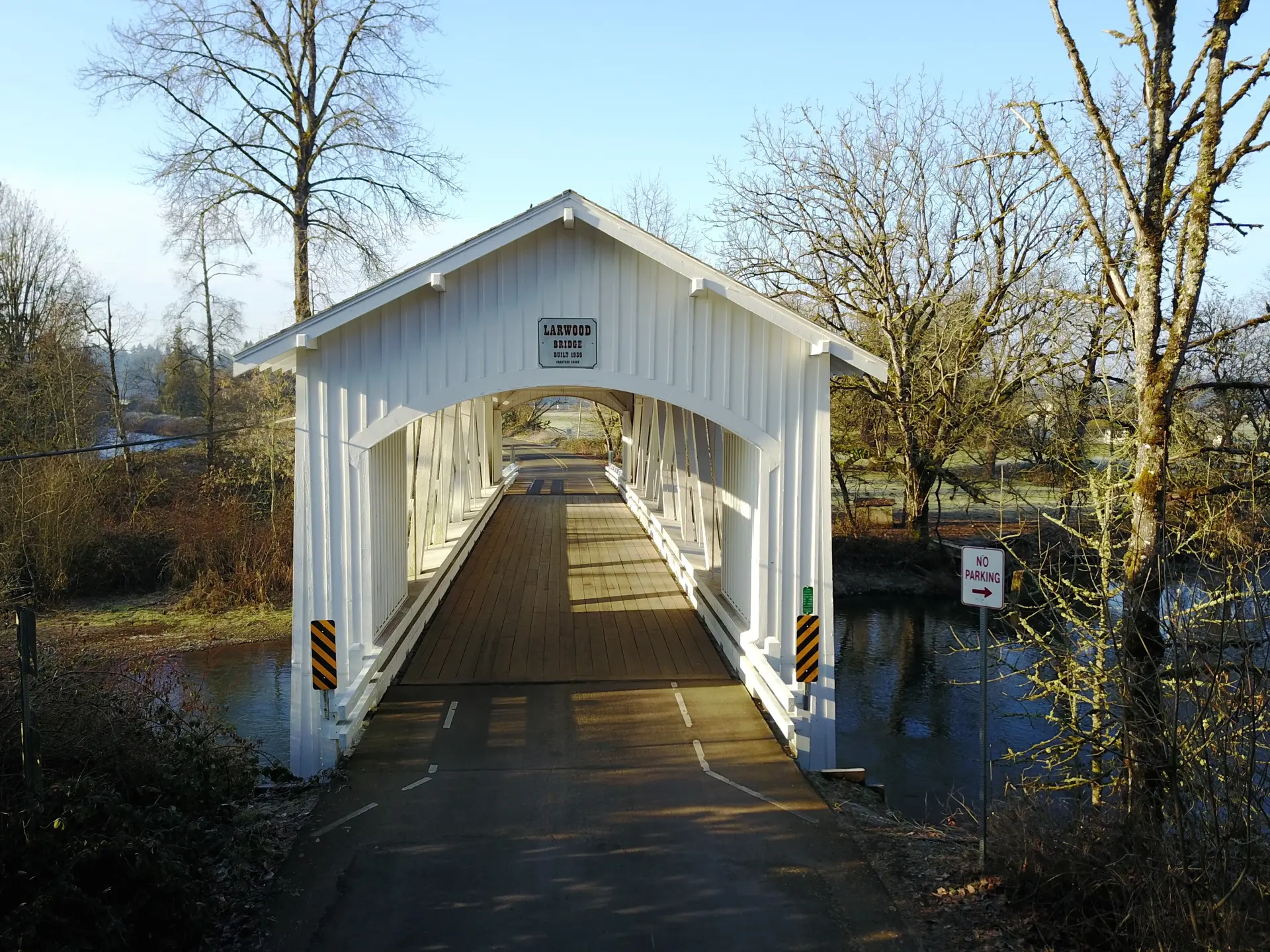
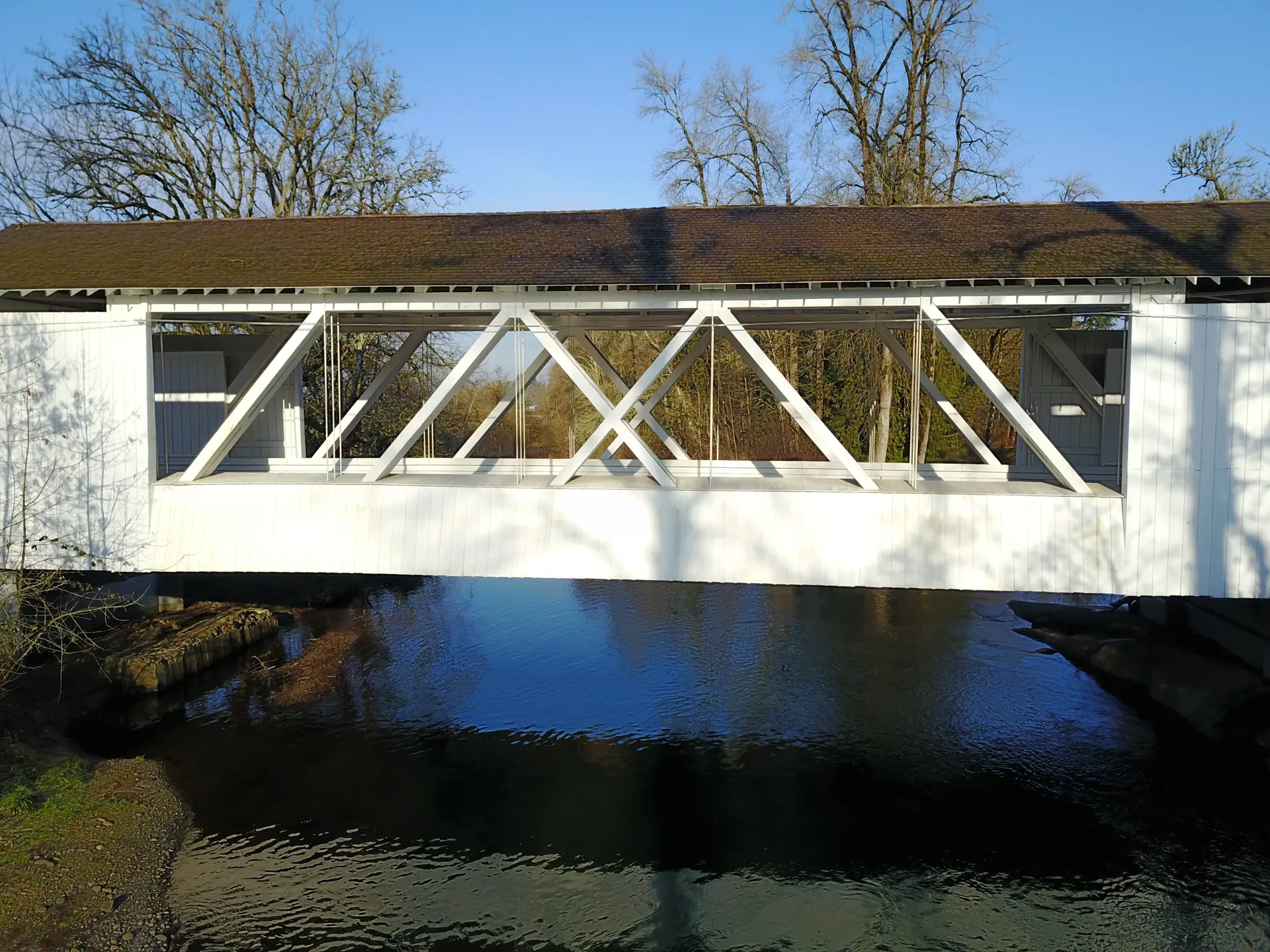
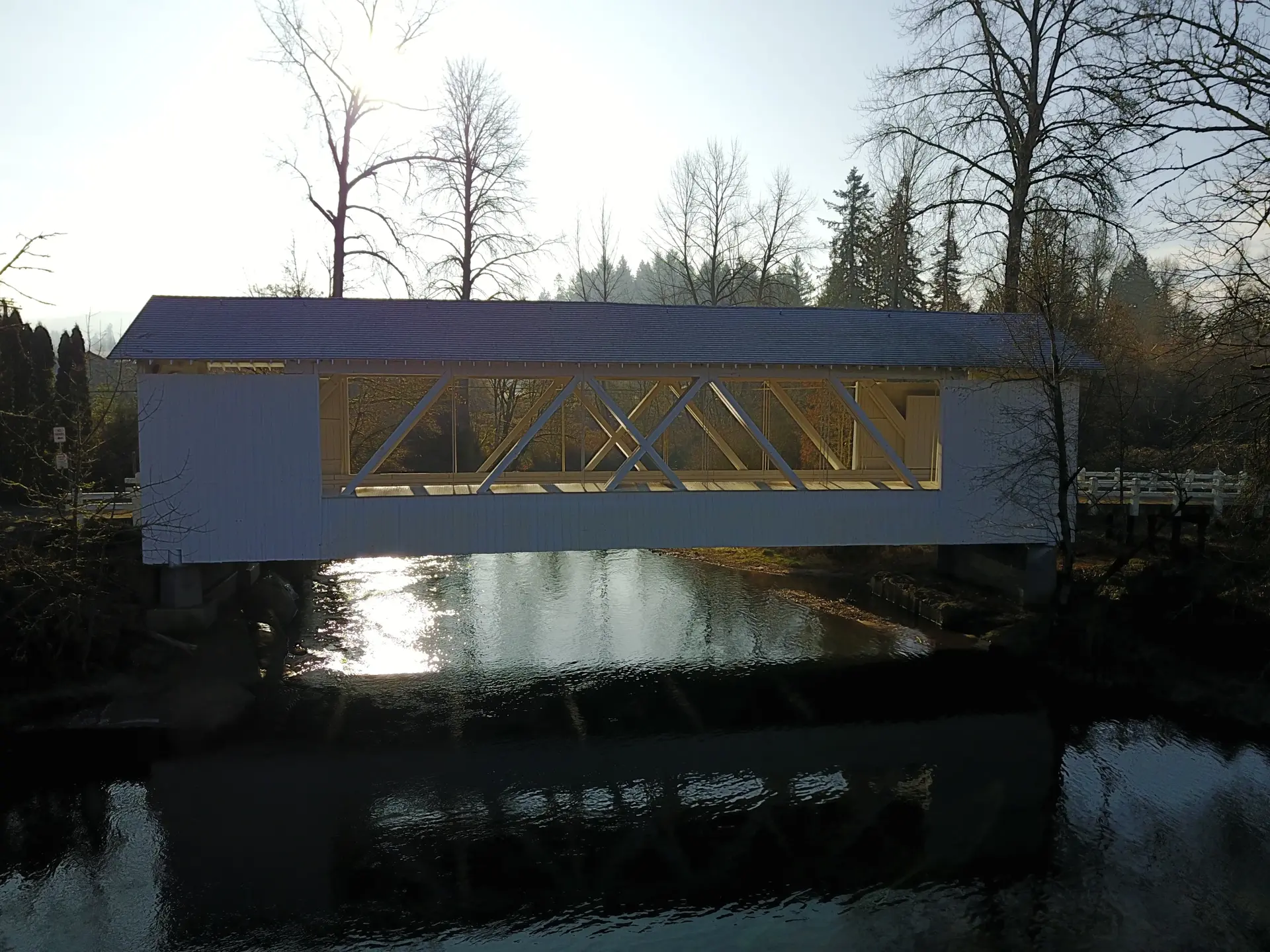
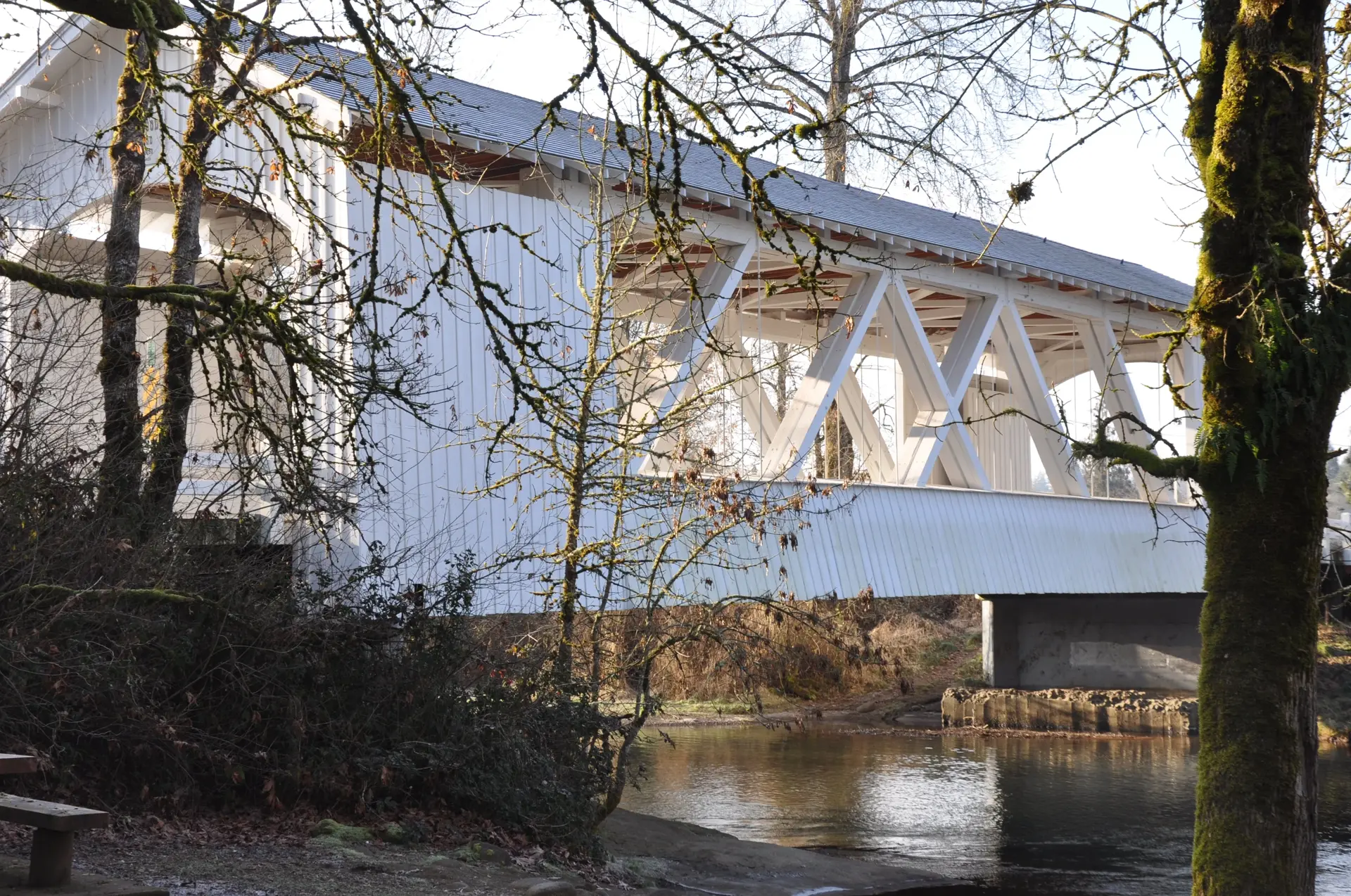
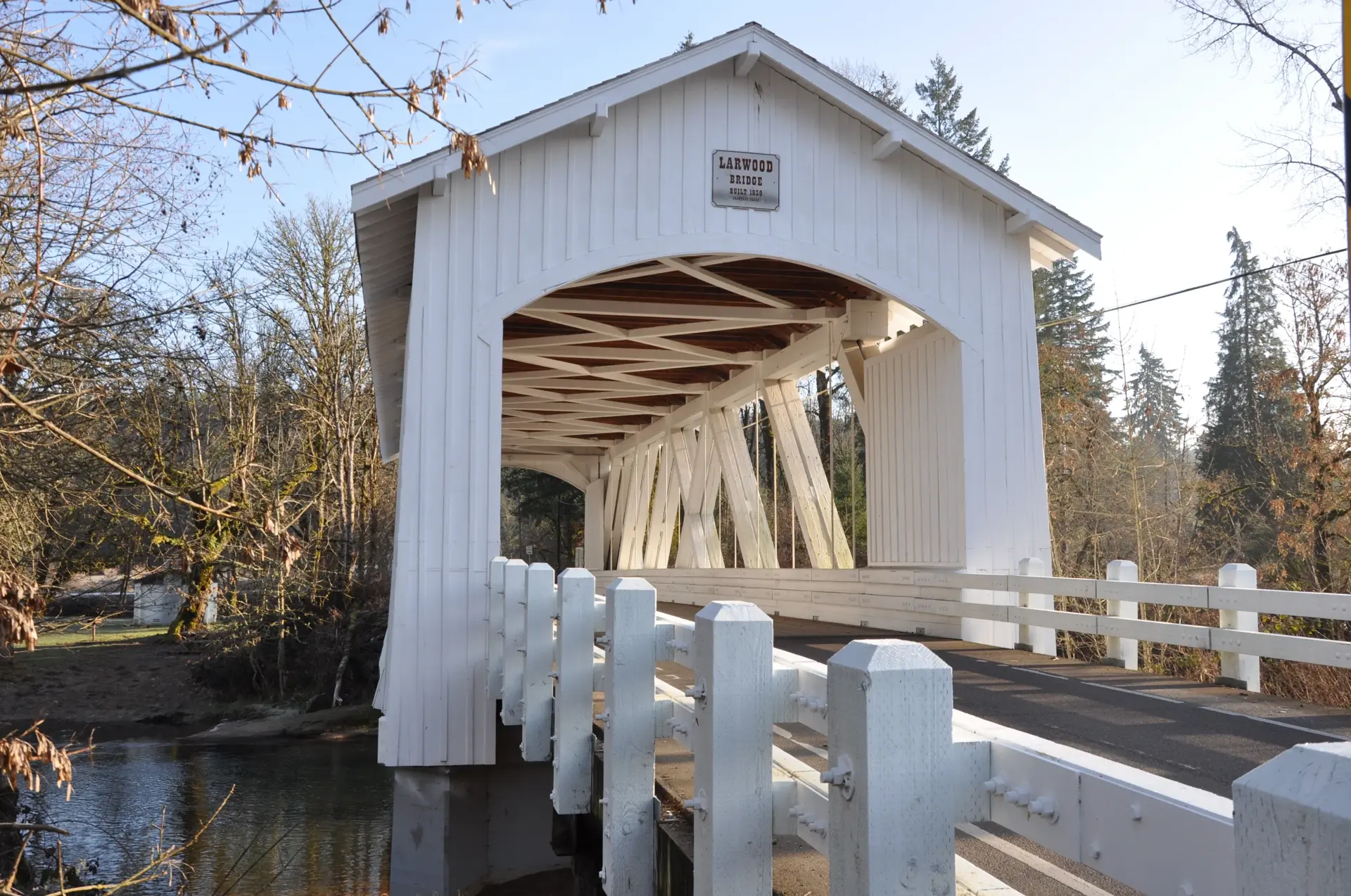
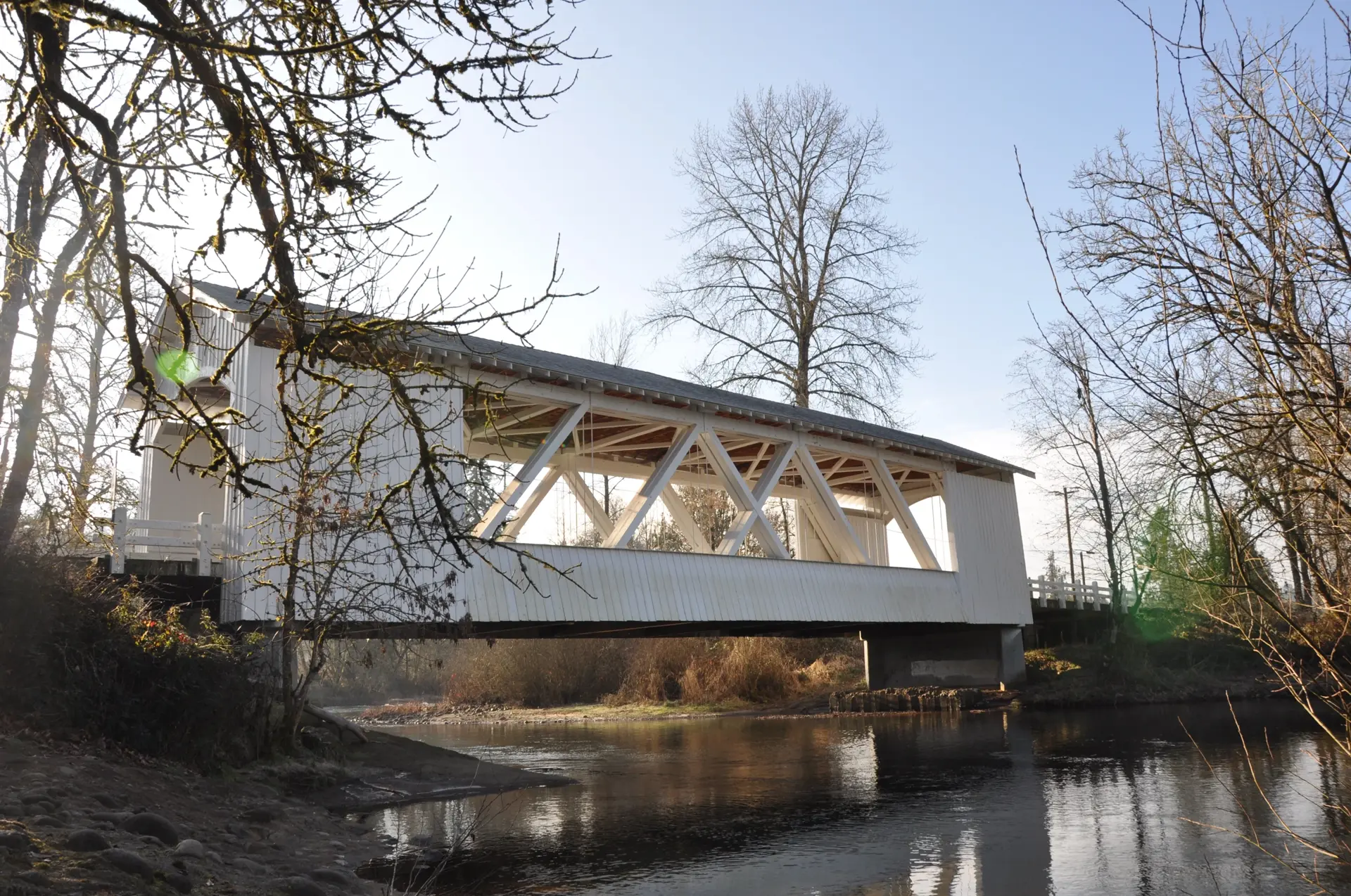
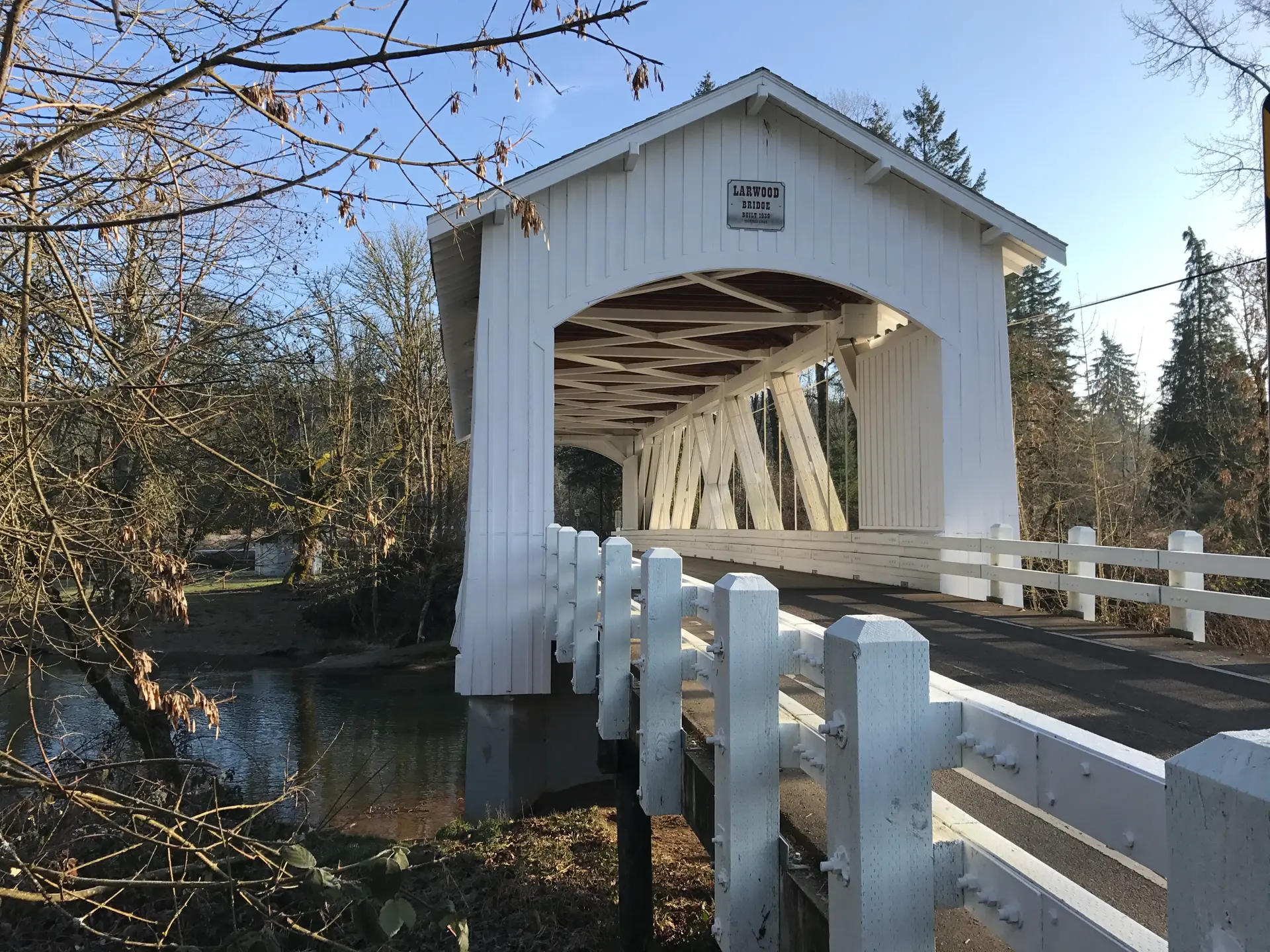
The Larwood Bridge is a 105-foot Howe truss covered bridge spanning Crabtree Creek in Linn County, Oregon. Built in 1939 by Linn County, it is one of the most photographed covered bridges in the state — distinguished by its bright white paint, open truss siding, and picturesque setting above a rocky stretch of river flanked by old-growth cottonwoods and alders.
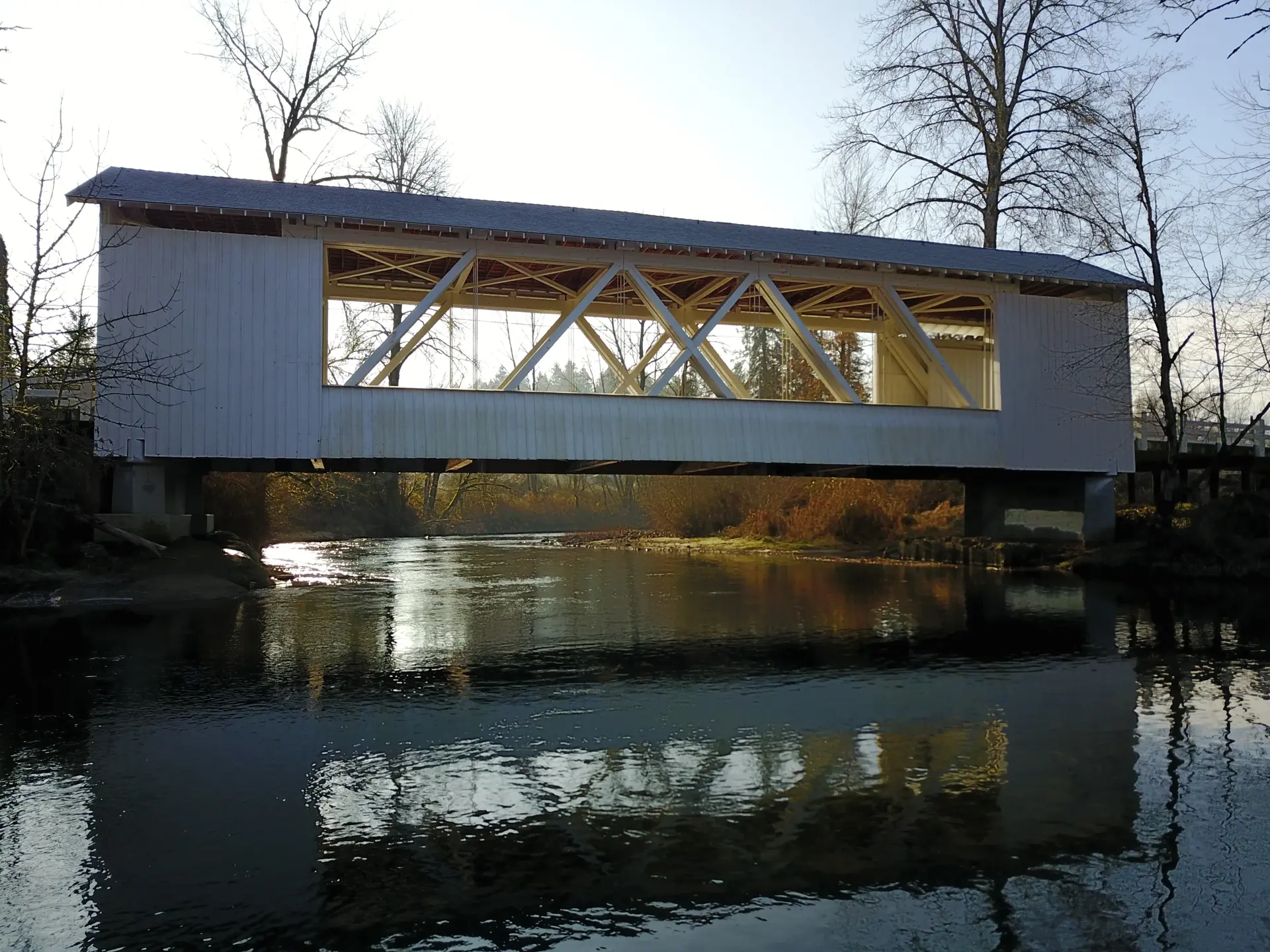
The bridge carries Larwood Drive, a rural county road, and remains open to one lane of vehicle traffic. A small wayside park on the south bank provides easy pedestrian access and a popular viewpoint of the structure from below, where the Howe truss system is fully visible through the open side panels.
Larwood Bridge was constructed in 1939 by Linn County using the Howe truss system — a design patented in 1840 by William Howe that combines wooden diagonal members under compression with vertical iron rods under tension. This hybrid system made the Howe truss especially well-suited to the heavy Oregon timber supply and the skill sets of local bridge builders.
A covered enclosure was added to protect the wooden structure from Oregon's heavy rainfall, extending the bridge's serviceable life well beyond the typical open timber span. The vertical siding was left partially open along the sides, an unusual treatment for the region that allows light into the interior and provides unobstructed views of the river below.
After decades of service, the bridge was reconstructed in 2000 while retaining its historic form and character. It was listed on the National Register of Historic Places in 2004 as part of a multiple property nomination covering Oregon's covered bridges.